Election entrée: Preference pile-ons

Share
Last election, independent Kylea Tink won the seat of North Sydney on a primary vote of 25%.
This was the lowest for a winning candidate in 2022, closely followed by the winning candidate in Nicholls, National MP Sam Birrell, who won with 26% of the primary vote.
In Groom, independent Suzie Holt received 8% of the vote on first preferences, putting her in fourth. She finished in second place with 43% after leapfrogging One Nation and Labor on preferences.
The only candidate to win from third place in 2022 was the Greens’ Stephen Bates in Brisbane.
It is relatively recent that Independents and minor parties benefited most from Australia’s voting system.
Until the 1980s, it was the Coalition who mainly benefited from preferential voting. From 1949 to 1987 Coalition candidates won 106 races where they were behind on first preferences, with Labor taking only seven.
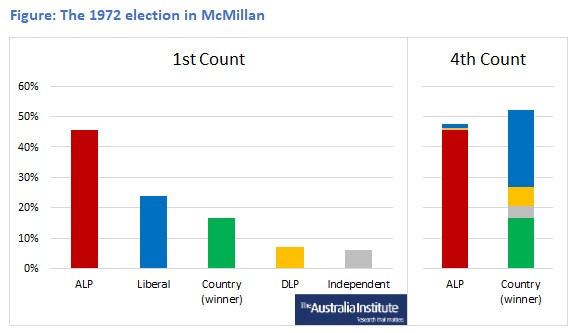
The lowest ever primary vote for a winning candidate in a federal election was received by the National (then Country) party’s Arthur Hewson in 1972, who won McMillan from third place with just 17%. Preferences from independent, Democratic Labour Party, and Liberal voters allowed him to beat Labor on the final count with 52%.
It took until 1990 for Labor to win more electorates from behind than the Coalition, winning seven to their three. This was due to the high vote share for Democrats and Greens, whose preferences mostly flowed to Labor.
Since then, Labor candidates have won on preferences more often than Coalition ones, but as alternatives develop across the political spectrum it is far from certain that will continue in the future.
The great benefit of preferential voting is that it ensures that Australians cannot “waste” their vote. Under full preferential voting, Australians number every candidate according to their preference.
The full distribution of preferences confirms that between the last two candidates remaining, the majority prefer the ultimate winner. Unlike in first past the post, an elected representative can be confident that they are preferred by the majority over the runner up – even if they started with a lower primary vote.
Between the Lines Newsletter
The biggest stories and the best analysis from the team at the Australia Institute, delivered to your inbox every fortnight.
You might also like
One Nation’s rise gives progressive voters unexpected power in ‘safe’ Coalition seats
The rise of One Nation creates a surprising opportunity for progressive voters.

Australia’s gun laws aren’t as strong as you think
Nearly three decades after the Port Arthur massacre, there are more guns than ever before in Australia and there is still no national firearms register.

Why the wealthiest don’t need another tax cut
Australia is a low taxing nation, but Shadow Treasurer Tim Wilson still seems to want the highest earners to pay less.