
The latest wages price index figures from the Bureau of Statistics reveal just how far workers ability to purchase items with what they earn has fallen.
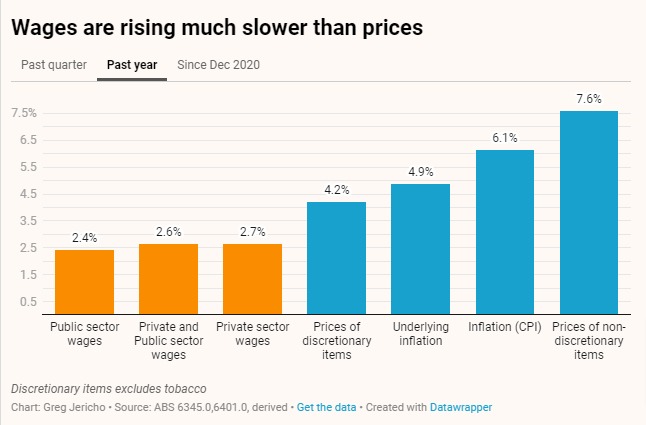
In his column in Guardian Australia, Labour Market and Fiscal Policy Director, Greg Jericho, notes that while nominal wage grew 2.6% in the past year, real wages fell 3.3%. That fall has taken workers’ purchasing power back to 2012 levels.
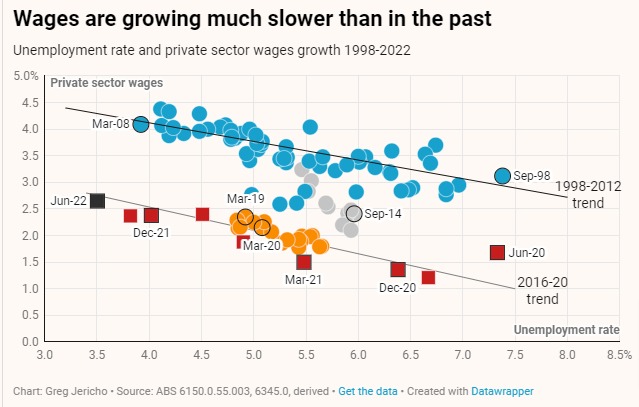
This lack of strong wages growth despite unemployment being at nearly 50 year lows highlights just how skewed the bargaining system is against employees. In the past, unemployment this low would have been delivering wages well above 4%.
The weak public-sector wages growth also reveals the impact of public-sector wage caps. For 6 consecutive quarters the annual growth of public-sector wages has been below that of the private sector. No longer does the public sector guide and support private-sector wages. This is the result of instituting arrangements which prevent a natural bargaining process to occur and in a time of rising inflation produce a massive fall in real wages for public-sector workers.
In the past year wages in the education system, for example, rose just 2.3% on average, meaning teachers real wages fell 3.7% in the past year.
While the real wages fall is terrible, it is likely worse for many families.
The Bureau of Statistics estimates that households on average spend around 60% of their weekly expenses on essential/non-dictionary items. But because the prices of those items rose by 7.6% over the past year compared to average inflation of 6.1%, any households that need to spend a greater share of their income on essential items would have seen their real wages fall even further. For a family that spends 80% of their weekly budget on essential items, real wages fell by 4% – a truly horrific experience.
The wages data confirm that there is no wages breakout that is driving inflation, instead workers are being left behind while companies produce record profits.
The Jobs and Skills Summit in September must address this imbalance.
Between the Lines Newsletter
The biggest stories and the best analysis from the team at the Australia Institute, delivered to your inbox every fortnight.
You might also like

The Wage Price Index shows pay packets are up. So why doesn’t it feel that way?
The latest figures from the Australian Bureau of Statistics show wages are growing at a reasonable rate, but a deeper look shows a big problem might be about to bite Australian workers.
“Vital” wage rise would be a lifeline to low income earners and wouldn’t drive inflation – new analysis
Updated analysis by The Australia Institute reveals that a fair and appropriate increase to the minimum wage, and accompanying increases to award rates, would not have a significant effect on inflation.
Budget 2026: Housing changes to slowly reverse decades of damage
The government’s changes to capital gains and negative gearing will begin to undo decades of damage to the housing market caused by Howard-era policies – so will Elinor actually be able to buy a house?