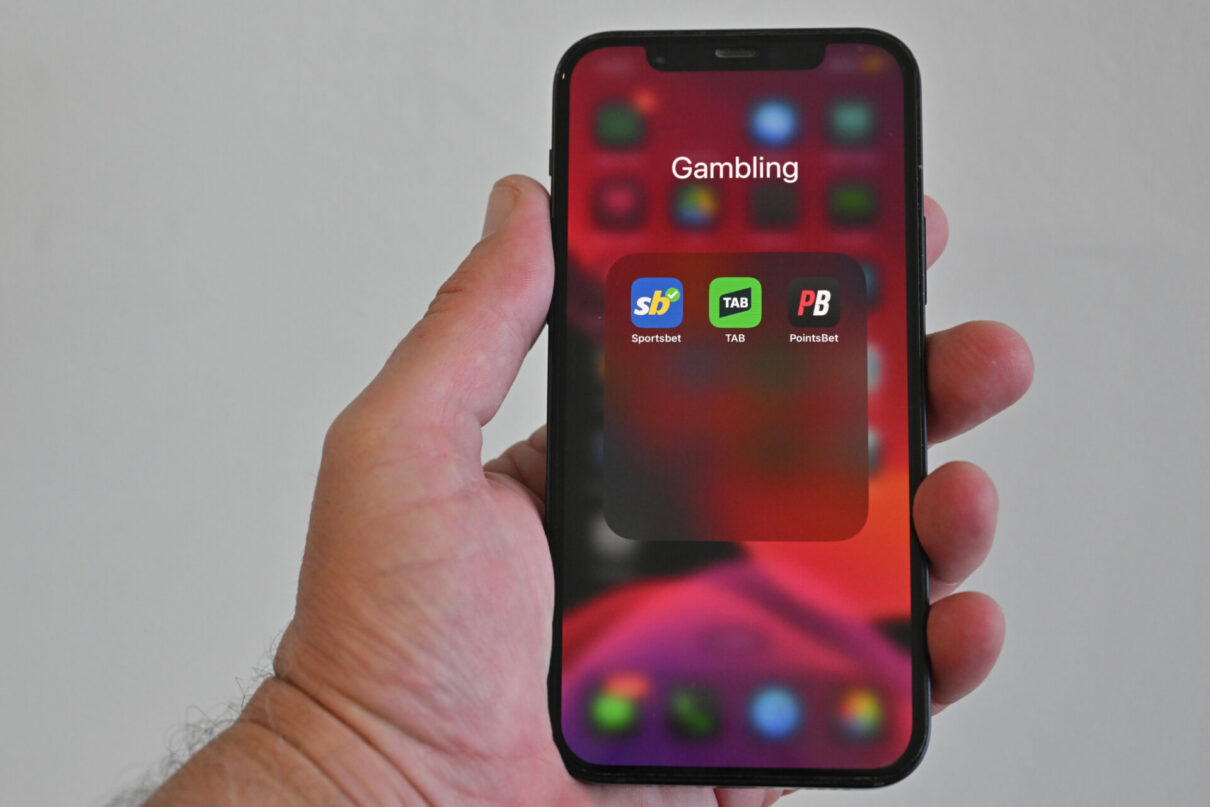

Everyone with a smartphone walks around with the entire internet in their pocket, but thanks to the gambling industry that also means there’s a casino in everyone’s pocket as well.
Australians love a punt, but the house always wins.
We’re the world’s biggest gamblers per capita, and the biggest losers, losing more than $32 billion in bets last year. Yes, the gambling reforms announced by the Albanese government are important, but they are roughly the equivalent of throwing a bucket of water on a bushfire.
Australia Institute research shows the $32 billion Australian households lost to gambling is more than Aussies spend on their electricity and gas bills ($29.5 billion) or alcohol ($26.8 billion). That’s more than $30 billion a year in profit going to gambling companies. Thirty billions dollars a year that’s not being spent in the economy at local businesses down the main street of your city or town, that’s not being spent on food, rent or the basic necessities of life. Can we really afford that, in this economy?
These massive gambling losses are often framed as the tragic but unavoidable cost of doing business, rather than the inevitable consequence of a predatory gambling industry untroubled by regulation.
The Whitlams once sang about blowing up the pokies (a timeless classic no less relevant today), but it’s online gambling that has exploded in recent years.
Gambling and sport have always gone together, but the saturation of online gambling ads has infected sport like a disease. Remember when you could watch sports without seeing a thousand sports betting ads? Those days are long gone. In 2022, academics found 12 to 17 year olds reported being “inundated” with gambling ads. It’s so insidious, research shows Australian teenagers are more likely to have gambled in the past year than to have played any of the most popular sports. Let that sink in for a minute. The almost 1 million teenagers (12 to 19 year olds) who gambled in the past year is enough to fill the MCG nine times over. The gambling industry knows if it can get kids hooked, it has customers for life.
The report “You win some you lose more” from the Murphy Review into online gambling made 31 comprehensive recommendations to reduce the harm from problem gambling, each unanimously endorsed by the committee. It included establishing a national regulator (at the moment, the Northern Territory Racing and Wagering Commission is the default regulator) and a total ban on gambling advertising phased in over time.
The gambling industry predictably went nuts, arguing a total ad ban was a threat to sporting codes, local news media and the future of grassroots sport. Straight out of Big Tobacco’s playbook. But a total ban on gambling advertising remains extremely popular with the public. Australia Institute research shows three quarters of Australians (77 per cent) support a ban on gambling advertisements, including a majority of voters from across the political spectrum. Money the media loses in gambling advertising revenue could be replenished by a modest levy on the industry. In fact, a levy is something else the Murphy Review called for. Gambling reform activists weren’t asking for some kind of unrealistic unicorn solution, but a straightforward policy response that put the community first.
The Albanese government’s response to the Murphy Review was both long overdue and hotly anticipated. But it turned out to be a fizzer.
The government didn’t announce the major bipartisan reforms recommended by the Murphy Review, so much as it revealed the same pig with different lipstick.
Instead of a total ad ban, it will restrict wagering advertising during live sports (between 6am and 8.30pm), ban gambling ads on player uniforms and in stadiums, and cap the number of gambling ads to three per hour per channel. But the evidence shows that these kind of restrictions don’t work anywhere near as well as an outright ban could.
“These reforms get the balance right, so children don’t grow up thinking sport and gambling are inextricably linked, but letting adults have a punt if they want to,” the Prime Minister told the Parliament, as though anyone had suggested banning gambling altogether.
Given that almost a third of 12- to 17-year-old Australians gambles before they are legally old enough to punt, these reforms won’t be enough to stop the advertising onslaught from targeting kids.
But if the government thought it had an ace up its sleeve by burying the release of its limp response on budget day, it overplayed its hand.
Gambling reform advocates accused the government of cowardice and failing to address all 31 recommendations.
Perhaps the cowardice has something to do with the fact Australia’s parliamentarians routinely accept free tickets to sporting events and donations from the industry it’s supposed to regulate.
The Albanese government wants you to believe that solving the issue is difficult, but the solutions are not hard or complicated.
No one is calling for the legal gambling industry to be shut down, just for sensible reforms that would limit the harm and the damage. If we ban gambling ads, fewer people – especially fewer kids – will be sucked into a gambling habit that could cost a lifetime.
As an elder Millennial, digital technology often makes me feel like I’m living in the future. Getting a Facetime call on my mobile phone will always make me feel like I’m in a utopian episode of Star Trek. But the incessantly annoying ads for “the quaddie” (whatever that is) on every device in my vicinity feels more like I’m living in a dystopian episode of Dark Mirror.
Every year, the gambling industry ruins lives. Jobs lost. Homes lost. Lives lost. Families destroyed.
We cannot eliminate it, but the Albanese government can do a hell of a lot more to reduce the number of people harmed by it.
The national gambling toll – on individual lives, on the community, on the economy – is easily quantifiable in dollars.
It’s the human suffering that’s immeasurable.
Between the Lines Newsletter
The biggest stories and the best analysis from the team at the Australia Institute, delivered to your inbox every fortnight.
You might also like

Only thing standing in way of gambling reform is government’s cowardice
Australians are the world’s biggest losers. Last year, Australians lost $34.8 billion in bets. That’s more than Australian households spend on electricity and gas ($29.5 billion) or alcohol ($26.8 billion) – so it seems safe to say we have a problem.

Over $104 billion lost to gambling since Murphy Review
New research by The Australia Institute shows that Australians have lost over $104 billion to gambling in the three years since the Murphy Review released its final report into the harms of online gambling. Today the Albanese Government is expected to introduce legislation in response to the Murphy Review. If passed, it will introduce certain

Online gambling “reshaping a whole generation” as government reforms fall well short
The government’s latest reforms don’t do nearly enough to protect Australians from gambling harm.