Webinar: Stop passing the buck -Workers’ compensation and ‘gig’ workers
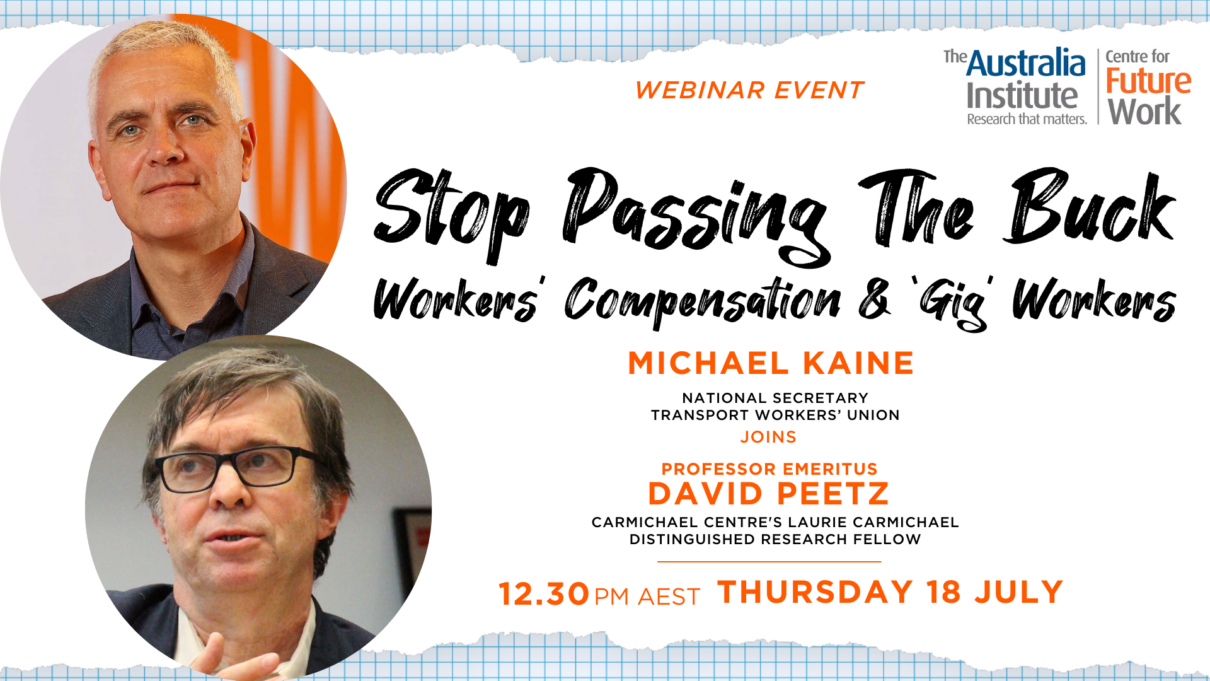
Workers’ compensation and rehabilitation are amongst the most important legal issues facing the ‘gig’ economy. This reflects the potential vulnerability of these workers and their families, co-workers, and community to harsh and long term consequences from injuries. For a while, it looked like federal industrial policy might ‘solve’ the workers compensation problem by redefining ‘gig’/platform workers as employees.
However, the policy decision to enshrine minimum rights for a separate ‘employee-like’ category of workers leaves gig workers outside the scope of workers compensation protections.
In this discussion we will hear from those researching and advising on the reforms necessary to better protect injured gig workers, a worker who has been seriously injured, and those who are organising and advocating for policy and law reform.
Free Event – Register Now
Speakers:
- Michael Kaine – National Secretary Transport Workers’ Union
- Professor Emeritus David Peetz – Carmichael Centre’s Laurie Carmichael Distinguished Research Fellow.
When:
Thursday, July 18, 2024 at 12:30 pm AEST
Where:
Zoom
Between the Lines Newsletter
The biggest stories and the best analysis from the team at the Australia Institute, delivered to your inbox every fortnight.
You might also like

Want to lift workers’ productivity? Let’s start with their bosses
Business representatives sit down today with government and others to talk about productivity. Who, according to those business representatives, will need to change the way they do things?

Gas exporters pay no tax (again) | Between the Lines
The Wrap with Hayden Starr For the last five years I’ve worked behind the scenes, helping communicate the Australia Institute’s research online and on social media, including writing and editing this newsletter. As my time with the Australia Institute comes to an end, it’s my pleasure to write The Wrap for my last newsletter with
Victorian Inquiry Offers Novel Routes to Regulating Gig Work
Findings from a landmark inquiry commissioned by the Andrews Victorian government into the work conditions in the “on demand” (gig) economy have been released. The report’s findings are timely with COVID-era unemployment surging and an expanding pool of vulnerable workers relying on “gig” work to meet living costs.