A win for voluntary action
 The Australia Institute has spent a lot of time since 2009 explaining a simple, but often misunderstood feature of emissions trading; once a national target is set any efforts by individuals to reduce ‘their’ emissions simply frees up spare pollution permits for other polluters. Having identified the problem the Institute also proposed a solution in the form of a ‘cap and slice’ amendment which would ensure that any voluntary efforts by individuals or communities to reduce their emissions (for example installing solar panels for individuals, investing in a community wind farm or setting a state wide target such as the ACT’s 40 per cent emission reduction target) actually resulted in slicing the amount of pollution permits that would be issued rather than simply traded from one polluter to the next.
While the previous Climate Change Minister, Penny Wong, was determined to deflect attention away from this characteristic of the previous Carbon Pollution Reduction Scheme (CPRS) the latest plan negotiated between the government, the Greens and the Independents has finally acknowledged the need to empower individuals and communities to do their bit extra.
While the legislation is yet to be drafted according to the details released by the government yesterday:
“Voluntary action in addition to GreenPower and voluntary cancellation of units could also be recognised, on advice from the Climate Change Authority on whether a robust methodology can be developed to recognise additional voluntary action by households.”
This should mean that at as long as individuals and communities can accurately measure the benefits of their extra efforts then they really will be able to make a difference. It shouldn’t be hard, for example, for the ACT Government to document the additional abatement that will result from their ambitious territory-wide plan to cut emissions by 40 per cent by 2020.
If you are involved in community campaigns to reduce emissions then you should contact both the federal Climate Change Minister and the appropriate local or state government bodies to let them know that you are keen to talk to them about developing the ‘robust methodology’ the government says it will require.
Between the Lines Newsletter
The biggest stories and the best analysis from the team at the Australia Institute, delivered to your inbox every fortnight.
You might also like

‘Whinge and win’: We mustn’t mistake loudest voices for a majority
One of my first journalism jobs was at a regional newspaper with a printing press attached. As a baby journalist, it was magical – you could see your front page story printed in front of you before it was bundled and sent out on trucks to become the next day’s news.
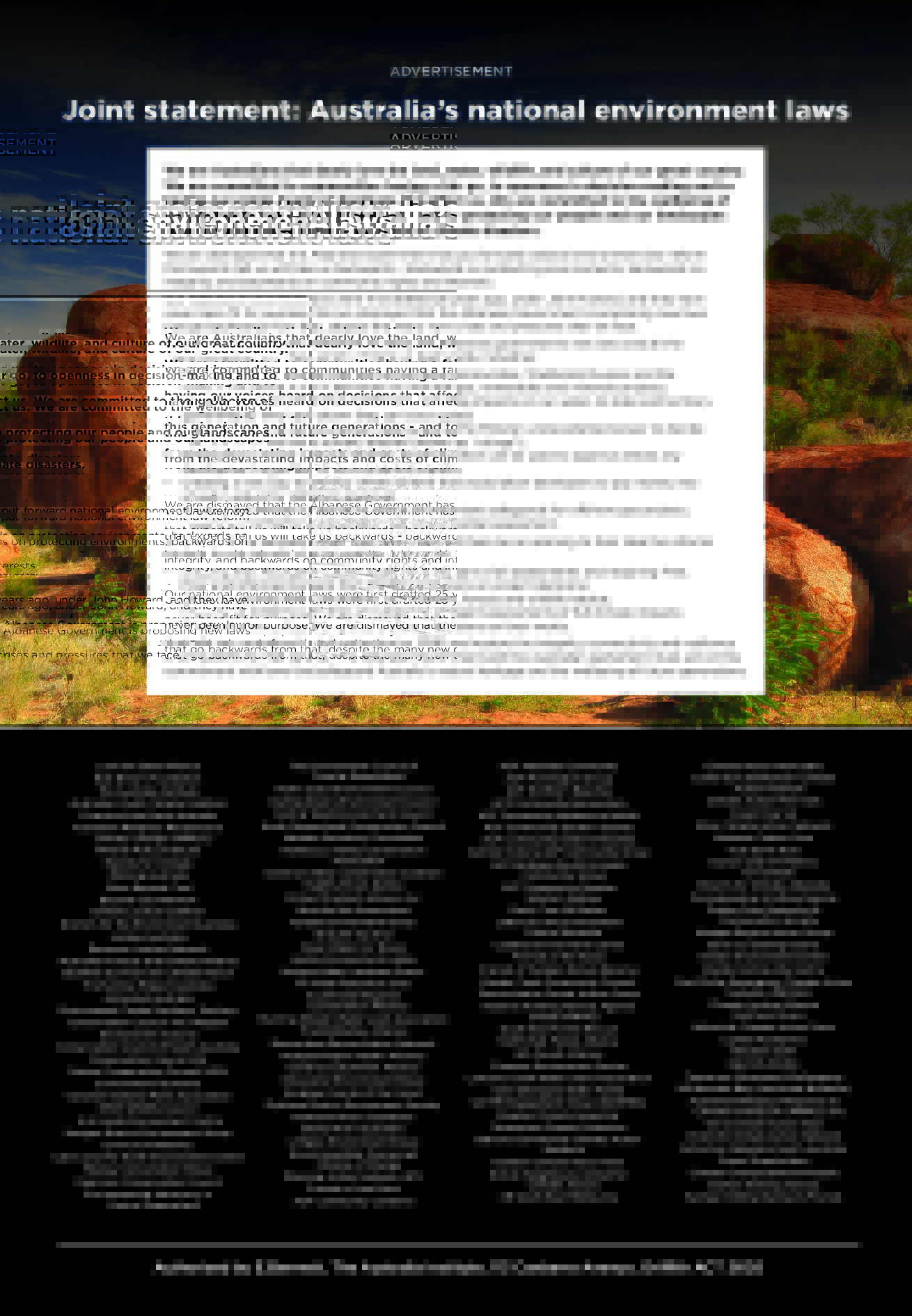
Joint statement: Australia’s national environment laws
We are Australians that dearly love the land, water, wildlife, and culture of our great country. We are committed to communities having a fair go, to openness in decision-making and to having our voices heard on decisions that affect us. We are committed to the wellbeing of this generation and future generations – and to

If you win most literary prizes, you pay tax. If you win The Block, you don’t. How is this fair?
When Goorie and Koori poet Evelyn Araluen won last week’s $100,000 Victorian Prize for Literature, along with the $25,000 Indigenous Writing prize, she called on the Australian government to change the way it taxes arts prizes. Araluen won for her poetry collection, The Rot, described by the judges as “a work of remarkable poetic intelligence;