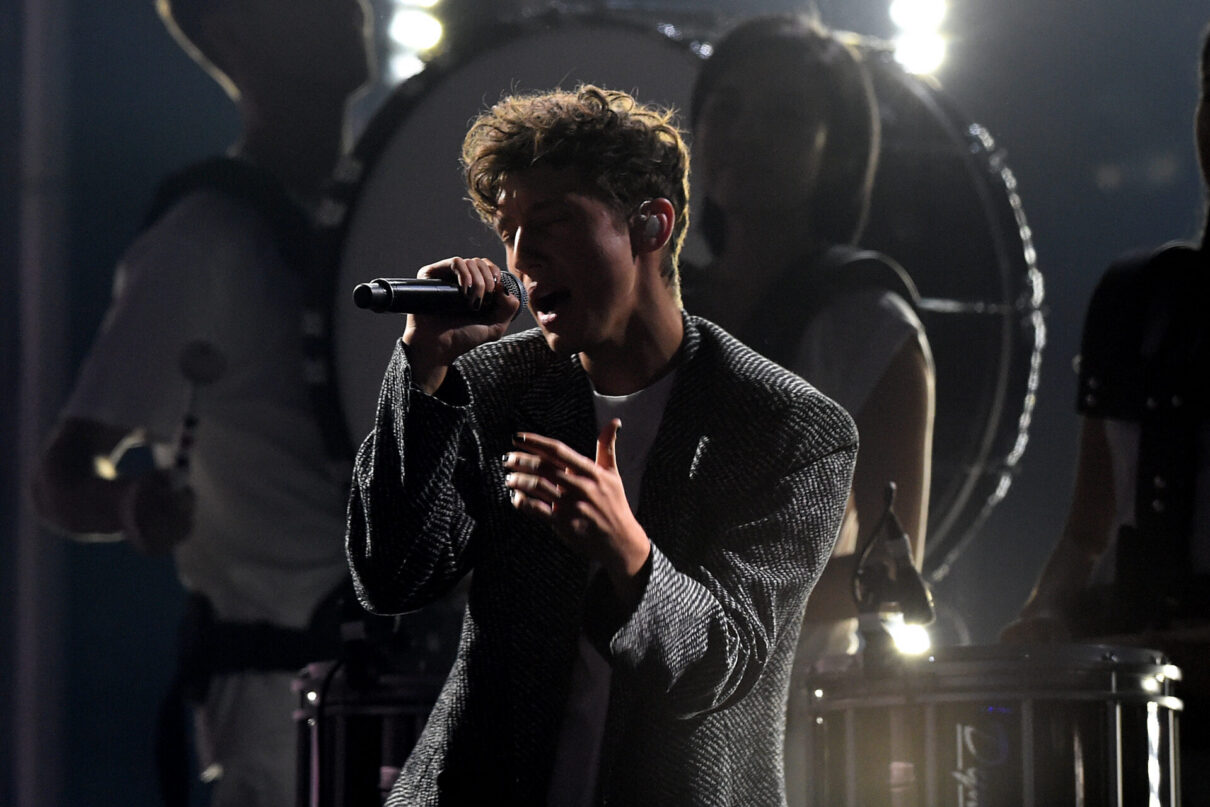

Last weekend, music fans across Australia tuned into national youth music station Triple J for the 33rd annual Hottest 100.
Listeners vote on their favourite songs from the previous 12 months in what has become known as “the world’s largest musical democracy”. Over two million votes were cast for the latest countdown. In this wide-open playing field, the success of Australian artists is a source of national pride.
Since Spiderbait became the first Australian artist to top the countdown with their song Buy Me A Pony in 1996, a total of 16 Australian artists have clinched the number one spot. Although British singer-songwriter Olivia Dean took out this year’s honours, five of the top 10 songs were by Australian artists. This good showing, however, no doubt has something to do with the fact that voters were given a new option of filtering their votes to include Australian artists only. The reason Triple J introduced this initiative probably has something to do with the reality that last year’s countdown featured the fewest artists since 1996.
Over on the national ARIA charts, not a single Australian song cracked the top 20 in 2025 – in fact Taylor Swift has more songs in the top 40 than all Australian artists put together. It seems that ARIA’s initiative to exclude songs more than two years old (which would weed out evergreen hits) is yet to bear fruit.
So what gives? Surely Australians haven’t just stopped liking Australian music?
The reality is that most people, especially younger people, are more likely to listen to music on an online streaming service like Spotify or a social media platform like TikTok than they are on any radio station, let alone on a CD or record.
Australia Institute analysis shows that the amount of Australian music streamed by Aussies declined between 2021 and 2024. Among the top 10,000 streams across all the major online platforms, the presence of Australian artists dropped by about 25 per cent, while the number of times they were streamed fell by about 30 per cent. Of the top 100 artists streamed in Australia in 2024, just five were Australian, and many of those were older acts like AC/DC and The Wiggles, who established names for themselves well before streaming services took off.
Meanwhile, the number of Australian artists appearing in even the bottom 5000 has also dropped, which means new artists aren’t gaining traction. Global streaming means that most artists are left with an even longer way to the top if they wanna rock’n’roll.
The research also showed that while the amount of money generated by the Australian music industry has increased, the amount going to Australian artists has fallen. Online platforms offer reach to new bands that was, until quite recently, unfathomable. A bedroom wannabe can upload a track, go viral and become an overnight success. But that’s vanishingly rare. While some Australian artists are making it huge overseas, the majority struggle to get heard in their hometown.
Streaming works in a fundamentally different way to radio. On radio, DJs based in Australia decide what listeners in a particular area hear, whereas on streaming services it’s algorithms that program what’s made available to each individual user.
Algorithms seem to be the big problem. The playlists made by streaming services like Spotify are put together not by DJs or curators, but by algorithms. If you’ve ever been in a café that plays the same genre of music for hours on end without pause you’re probably listening to an automated playlist. The songs on these playlists are selected based on the data of masses of listeners with similar tastes.
This is a problem for Australian music because although these algorithms filter for language, they don’t take geography or culture into account. For countries with a unique national language, like Germany and Italy, these algorithms can actually benefit local artists. Denmark, which has just 5.5 million people speaking the same language, is seeing Danish-language artists dominate their charts. This is because the algorithms know Danish people listen to a lot of Danish-language music, so they get fed more of it, which pushes domestic artists to the top of their charts.
But most Australian listeners are put into the English-language pool, which is dominated by one very big fish: the USA. The sheer number of Americans means that anyone listening to English-language music of a certain genre is going to get recommended whatever Americans like. Artists from Australia compete for audience against everyone else singing in English on the same handful of streaming services. Far from creating a free, global market for music, algorithms are disadvantaging Australian artists.
But these recent declines need not dictate our destiny.
Successive Australian governments have shown that they can regulate the Internet, and the tech giants that dominate it, for the benefit of the Australian community. The Morrison government’s News Media Bargaining Code and the Albanese government’s ban on social media use for Australians under 16 years old were world-first policies.
If streaming services are the reason that Australians are listening to less Australian music less often, this is where policy intervention is needed. Top 40 music stations are required to play at least 25 per cent Australian music. Triple J has a self-imposed quota of 40 per cent, which it exceeds. If radio stations have quotas, why do streaming services get a free pass?
Without this kind of intervention we’re leaving it up to global tech companies pick the next song, which means it’ll be harder and harder for Australians to hear music that uniquely reflects what makes us … us.
Between the Lines Newsletter
The biggest stories and the best analysis from the team at the Australia Institute, delivered to your inbox every fortnight.
You might also like

Why your Spotify Wrapped probably doesn’t have any new Australian music on it
Thursday was Spotify Wrapped day, when people around the world, like kids following the latest playground craze, shared their “top five” list.

Drowned out in the stream. Australian music is in trouble and needs investment: new report
The algorithms of global music streaming services like Spotify, YouTube, Amazon and Apple are killing Australian music, according to a new report by a former Spotify executive. As Australians celebrate the nation’s extraordinary artists to mark AusMusic T-Shirt Day today, the report reveals that the number of artists featured on music streaming giants has fallen by

Commonwealth live music inquiry: sing along with the chorus now…
The Australian Government’s latest report into the state of live music – “Am I Ever Gonna See You Live Again?” – makes some great recommendations, including for: tax offsets to be given to venues that host live music; training and education programs to help foster a love of music among young people; a rebate or