Australians want nothing more than a fair return for their gas: submission to Senate Inquiry
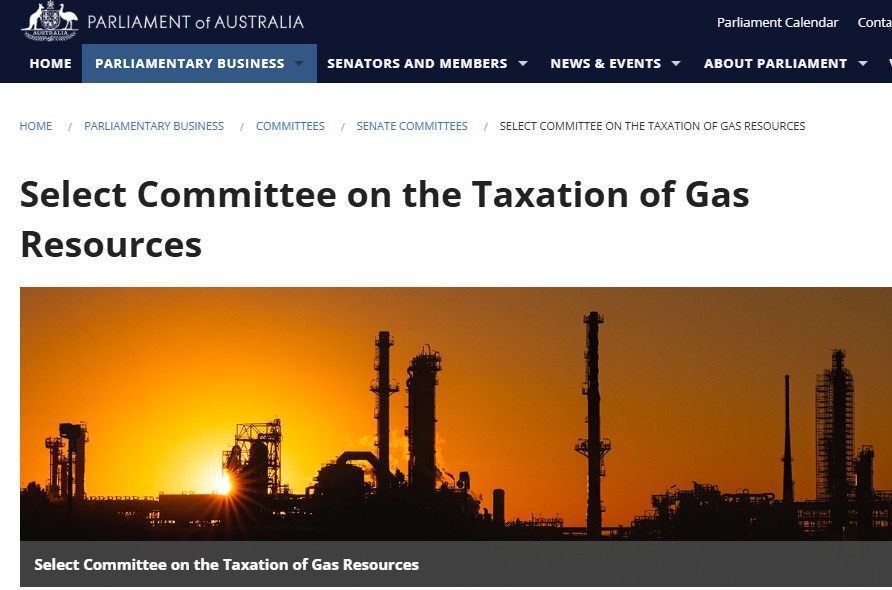
Australia’s gas exporters pay little tax or royalties, employ few people, push up gas and electricity prices and worsen the climate crisis, a Senate Inquiry has been told.
In a submission to the Senate Inquiry into the Taxation of Gas Resources, The Australia Institute says failing to tax gas exports fairly means accepting bigger budget deficits, lower quality public services and rising inequality.
It points out that while other countries have managed to capture a large share of gas export revenues for their citizens, Australia has not, with successive governments choosing to put the dividends of foreign-owned gas companies ahead of Australians.
Decades ago, Australia decided not to charge royalties for gas taken from Commonwealth waters, instead charging a ‘Petroleum Resource Rent Tax’ (PRRT). The submission finds that this tax has been an abject failure. Despite LNG exports surging by $47.7 billion between 2014 and 2025, the amount of revenue collected from the PRRT was actually $450 million lower in 2024- 25 than in 2014-15.
Key points:
- 56% of the LNG exported from Australia is royalty-free.
- Students pay nearly $4 billion more in debt repayments than the oil and gas industry pays in PRRT. Australians pay more in beer excise, spirits excise, or even the excise on pre-mixed alcohol and ciders than the oil and gas industry pays in PRRT. Farmers pay more in company and personal income tax than the oil and gas industry pays in PRRT. From 2014-15 to 2023-24, nurses paid more income tax than the PRRT and company tax paid by the oil and gas industry. The same is also true for teachers.
- Santos has paid zero company tax on $47 billion in sales over the past 10 years. Wholly foreign-owned INPEX paid no royalties, no PRRT, and only $483.7 million in company tax on $81.3 billion of income between 2013-14 and 2023-24, while exporting more gas each year than is consumed in NSW, Victoria and SA combined. Shell has bragged that it does not expect to pay any PRRT on gas drawn from the huge Gorgon project.
- Qatar and Australia export similar amounts of gas each year, but Qatar collects five times as much government revenue from its gas exports.
- Around 80% of Australia’s gas is exported, yet the gas export industry has repeatedly tried to convince Australians that there is a ‘shortage’ of gas.
- Since exports from Australia’s east coast began, the wholesale price of gas sold to east coast Australians has tripled. High gas prices have led to higher electricity prices.
- The gas export industry burns more gas than any other industry in Australia. The processing of gas for export uses so much energy that the gas export facilities generate more greenhouse gas emissions than all of the gas used by households or manufacturing.
- From 2021-22 to 2024-25, Australia exported $170 billion of royalty-free LNG.
- Gas companies have so far made $112 billion in windfall profits since the war in Ukraine began. Yet PRRT revenue was lower in 2023 than in 2001.
- Since 2015, 10 gas companies have exported $165 billion worth of LNG from Gladstone in Queensland. Six of these companies have paid zero company tax on the profits from these exports up to 2023-24.
The Australia Institute supports the introduction of a 25% tax on the value of gas exports, as proposed by the Australian Council of Trade Unions and supported by the Australian Council of Social Services, Ed Husic MP, the Australian Greens, several independent cross-benchers, and the CEO of the Commonwealth Bank, Matt Comyn.
It estimates that such a tax could raise up to $17 billion per year, more than enough to cover the cost of placing dental in Medicare, or to provide free tertiary education and TAFE, or free childcare.
“If Australia is to embrace progressive patriotism, as the Prime Minister calls it, or put Australia first, as Pauline Hanson says, then this is a once-in-a-generation opportunity to simultaneously repair the budget, improve the quality of public services and lower the cost of living,” said Dr Richard Denniss, co-CEO of The Australia Institute.
“If this parliament chooses to leave things largely unchanged, then it is choosing to put foreign-owned gas companies ahead of deficit repair and properly funding things like the NDIS, hospitals, schools and roads.
“I am not aware of any other country that gives away its valuable resources the way Australia does. I wonder if the gas industry executives who are currently running a scare campaign against fairly taxing gas exports could provide any other international examples of such generosity.
“Parliament has a choice. It could choose the status quo. It could implement convoluted or partial changes to the PRRT that risk being undermined by an industry with a history of being more across the details of Australia’s gas tax regime than those in Treasury or parliament. Or, this time, it could finally decide that Australians deserve a fair share for their gas.
“A 25% gas export tax would transform the Commonwealth budget, push down domestic gas and electricity prices and show Australians that their politicians are willing to put them first.”
Related research
General Enquiries
Emily Bird Office Manager
Media Enquiries
Glenn Connley Senior Media Advisor