Australia’s “stupid” surplus obsession must end
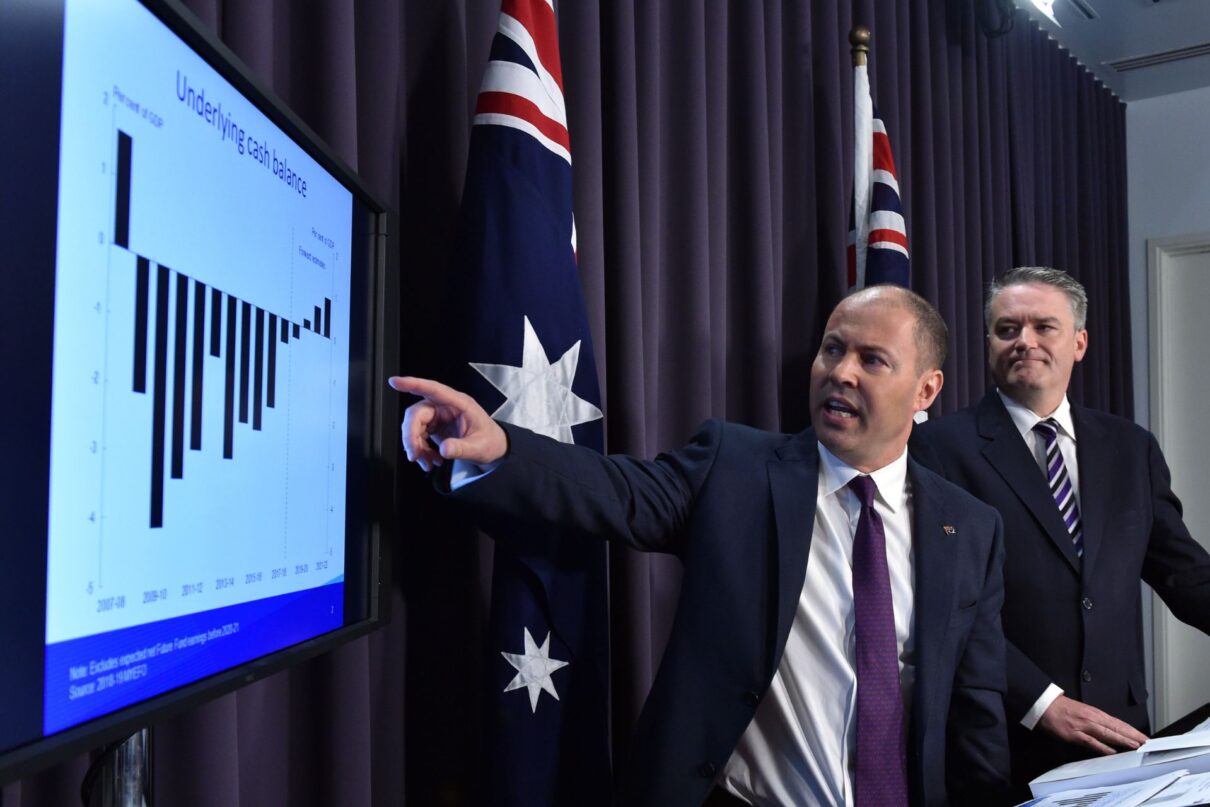
A budget surplus doesn’t mean a government is good at running the economy – we should focus on the choices they make instead, says Greg Jericho.
Australian governments like to brag about their big budget surpluses — one even slapped it on a mug — but they aren’t all they’re cracked up to be, according to Chief Economist at the Australia Institute, Greg Jericho.
“I think the discussion about budget surpluses and deficits is quite stupid, to be blunt,” he said on the latest episode of Dollars & Sense.
The accuracy of budget projections is highly dependent on commodity prices, international economic conditions and other factors outside a government’s control, making them notoriously difficult to get right.
“It’s a fairly complicated thing, the Australian economy. There are lots of moving parts and they never get it right,” Jericho said.
“Last year, in the May budget, there were essentially two months to go in the 2022-23 financial year, so you’d think they can’t get the figure that wrong. Treasury estimated that the budget was going to be in surplus by $4 billion.
“When we got complete figures in September…they found out, no — it wasn’t $4 billion, it was $22 billion!
“If they can be that wrong with two months to go, think how wrong they can be 12 months ahead, four years ahead.”
When getting excited about the Budget numbers on the first Tuesday in May, just remember, they will most likely be wronghttps://t.co/puKj8elgcL pic.twitter.com/WN4lIX0FbT
— Greg Jericho (@GrogsGamut) April 3, 2024
Jericho said it’s “absurd” to suggest a surplus or deficit alone reveals if a government is managing the economy effectively.
“It started with Paul Keating and then Peter Costello really set fire to it because he was Treasurer during a massive mining boom, where there were masses of tax revenue coming in, making it very easy to be in a surplus.
“He wanted to be able to sell that as being really good and he was this great economic manager.”
But like household debt, a national deficit can be good if used to invest in the future, Jericho argued.
“What if that deficit was used to build a hospital?
“Our children, and our children’s children, are going to be using that hospital — would you prefer they didn’t build it?
It’s not just about expenditure, he said, because budgets also reflect a government’s priorities in how it raises revenue.
“Let’s say we raised $5 billion more from the Petroleum Resources Rent Tax — that means we could reduce the tax on individuals by $5 billion with no change in the budget balance.
“Or we could spend that money on health or education.
“Budgets are very much about choices.”
Dollars & Sense is available on Spotify, Apple Podcasts, Google Podcasts or wherever you get your podcasts.
Between the Lines Newsletter
The biggest stories and the best analysis from the team at the Australia Institute, delivered to your inbox every fortnight.
You might also like
No Joy, only Division: It’s just the stupidest stupid we’ve yet seen
We are in, quite possibly, the stupidest timeline.
Play stupid games, win stupid prizes | Between the Lines Newsletter
The Wrap with Amy Remeikis You didn’t have to be a political savant to see what was going to happen this week from the moment Sussan Ley decided to open the door to negotiations with Anthony Albanese on the hate group bill almost no one wanted. One of the first rules of politics is if
Play stupid games, win stupid prizes. Why we’re all the losers from the hate speech fracas
The biggest loser in the political brinkmanship Anthony Albanese and Labor lured Sussan Ley and the Liberals into with the hate group legislation no one wanted is, as always, the public.