Same Parliament, more Australians: representation gap widens to record high, but PM is ‘satisfied’ with his supermajority
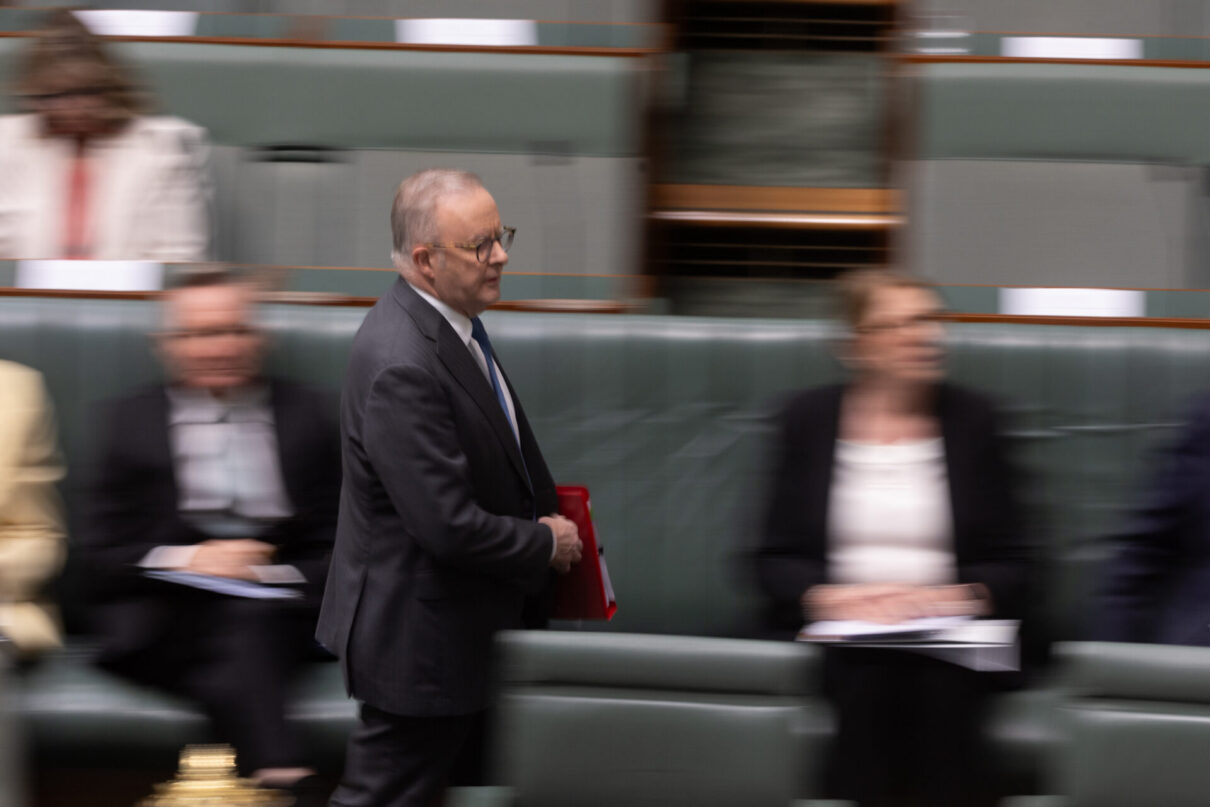
New Australia Institute research warns that Australia’s democracy is being stretched thin, with each MP now representing almost four times as many people as at Federation.
New Australia Institute research warns that Australia’s democracy is being stretched thin, with each MP now representing almost four times as many people as at Federation.
While the Prime Minister says he is satisfied with the current size of Parliament, a new national poll of 1502 people, conducted by YouGov, shows voters are finding it harder than ever to reach their local MPs.
Key findings of the report include:
- Whereas at Federation there were 51,000 Australians per House of Representatives MP, there are now 184,000 Australians per MP
- The last substantial increase in parliamentary numbers was over forty years ago, in 1984.
- Australia’s population has grown by 11 million since then.
- A 50% increase in the number of MPs would be needed to bring back the level of representation Australians enjoyed in the early 2000s
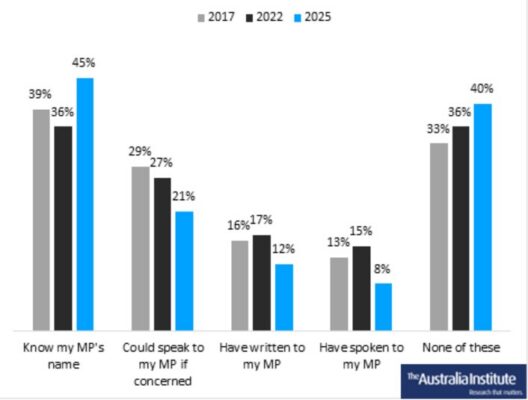
- Few Australians have spoken with their local MP (8%) or would feel comfortable doing so (21%).
- these metrics have gotten worse in the nine years since the Australia Institute first polled Australians about their relationship with their local member.
“Don Farrell should be congratulated for starting the conversation about expanding the Federal Parliament and, in turn, strengthening democracy in Australia,” said Bill Browne, Democracy & Accountability Director at The Australia Institute.
“Ben Chifley, Gough Whitlam and Bob Hawke all expanded the Parliament over the objections of the Liberals, and there is still an opportunity for Anthony Albanese to do the same.
“It has been over 40 years since the last increase in the size of Parliament, and in the meantime Australia’s population has grown by 11 million people.
“With local members stretched thin, it is no surprise that fewer and fewer Australians have ever spoken to their local member or would feel comfortable doing so.
“You don’t have to like politicians to think it’d be good if it was easier to get hold of your local member and if politicians faced more competition for ministerial and shadow ministerial positions.
“Australians in the country have it particularly tough, because their local member might be based hundreds of kilometres away. As Australia’s population urbanises, rural and regional electorates are only going to get bigger unless they can be split among more local members.
“Costs and staffing numbers have already increased to reflect larger electorates, so this isn’t about government spending or the total number of people working in politics – it’s about changing the makeup so that more people in politics are answerable to voters.”
Related research
General Enquiries
Emily Bird Office Manager
Media Enquiries
Glenn Connley Senior Media Advisor