What Venezuela means for Australia | Between the Lines Newsletter
Plus: A Time for Bravery – available now
The Wrap with Dr Emma Shortis
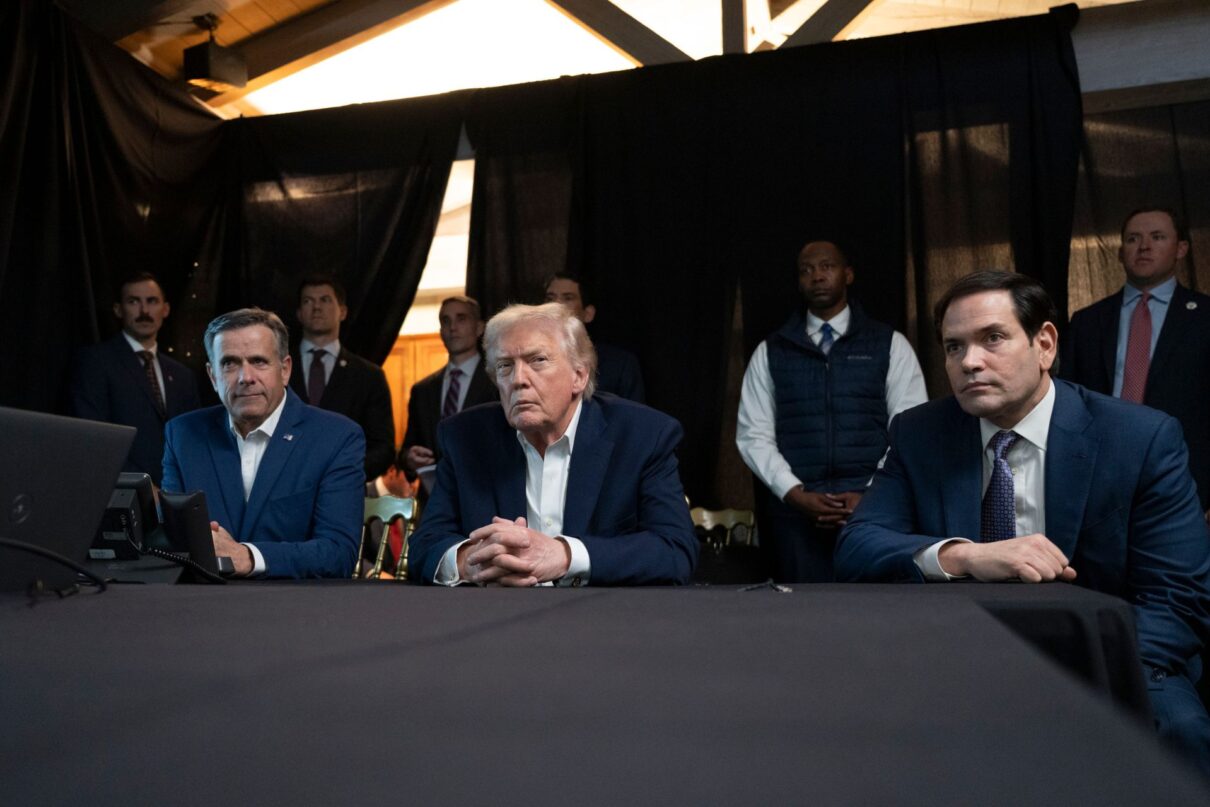
The Trump administration started 2026 as it means to continue: with violence and lawlessness.
Trump’s attack on Venezuela and kidnapping of the Venezuelan president clearly contravene every principle of international law.
This attack, and the administration’s escalating threats against other places, like Greenland, send a clear message. Trump is leading an imperial revival. His version of America has no respect for old alliances. It has no care for the safety or security of the rest of the world.
We are, now, in uncharted territory. The America we thought we knew is gone. And it isn’t coming back. Even a “decent” America (and there are many decent Americans) will be looking over its shoulder, cautious and reluctant.
This has deeply serious consequences for Australia. As our colleague Allan Behm wrote in The Point this week, we simply cannot bury our heads in the sand and hope this will all pass us by. It will not.
The Trump administration has already made that clear. It has trashed the Free Trade Agreement we signed with the US in 2004. The US Congress is threatening the Australian eSafety Commissioner with contempt charges if she does not testify before a congressional committee. She is being accused of “harassing” US tech companies – for enforcing Australian domestic policy and law in Australia.
If international law matters to Australia – and it does – then our response to Trump’s concerted attacks on the rule of law also matters.
And yet the Australian government appears reluctant to respond with clarity or moral courage, or to face what all this might mean for our own future.
Perhaps that is for fear of endangering the $360 billion Aukus submarine deal. Why anyone would think that this president, of all presidents, can be trusted to stick to an agreement, is unclear. And why anyone would think that a deal like that – which promises only that Australia will hand over billions of dollars and offers nothing real in return – would make us safer, not only ignores our new reality, but actively makes us less safe.
We are not defined by the Aukus deal, or this version of our relationship with the United States. For as long as we remain fixated on great power rivalries and the assumed need for us to take sides, we fail to see the threat that’s right in front of us. Repudiation of the international rule of law and the resultant lawlessness creates a kind of global Wild West, where anything and everything goes. Random wars, small and large, create a much more dangerous world than head-butting between muscled-up power freaks.
We are not powerless when it comes to shaping our own future or a better future for the world, though you might not know it from listening to the government’s responses. The fact is, Australia has power and agency, and now is the time that the government needs to exercise that agency in the interests of our own security and that of the many other nations that observe the international rule of law.
There is a great deal that Australia can do to reaffirm the rule of law, and to build genuine peace and security in the world. And there are plenty of opportunities to step up.
This week, the Trump administration withdrew from a raft of UN agencies and committees, covering issues from international law to the prevention of violence against children to climate change.
As I write this from Victoria, which today is dealing with catastrophic bushfire conditions, the grave security threat posed by our global, collective failure to act on climate is all too clear.
The Trump administration – now taking over sovereign nations by force in order to extract their fossil fuels – is actively making this threat worse.
And right now, Australia is complicit.
But that is not inevitable. It is entirely possible for Australia to act in its own interests and those of the global community by phasing out fossil fuels. And we can make it clear that international law matters. We can recognise that building the conditions for peace requires real action on all fronts – and that this means, now, changing our relationship with the United States from one of security dependence to constructive international cooperation.
It is up to all of us to continue pressuring this government to make the brave and necessary choices it was elected to make.
We are all of us in a world of darkness. All we can do is do what we can do. And for Australia, that is quite a lot.
— Dr Emma Shortis is the Director of The Australia Institute’s International & Security Affairs Program
The Big Stories
Engaging with people you disagree with is part of democracy. Silencing authors is not.
The Australia Institute’s decision to withdraw its involvement in, and sponsorship of, Adelaide Writers’ Week was easy to make but raises difficult questions.
Undocumented, underpaid, and over here
A new Australia Institute podcast shows why an amnesty is needed to address the estimated 7000 cases of people who have “disengaged” from the Pacific Australia Labour Mobility scheme.
Who is Zohran Mamdani, what is his agenda, and what would his equivalent in Australian Labor be promising to do?
Zohran Mamdani just broke all the rules for winning office in the USA. At only 34 years of age he is New York City’s first Muslim mayor, its first mayor of South Asian descent and the first born in Africa. There is no sense in which he was a small target. He wasn’t a centrist and he didn’t run a cautious campaign. He called himself a democratic socialist and he proposed taxing the rich and spending more on public housing and transport.
Decommissioning oil and gas: The fossil fuel industry’s gift that keeps on taking
While the fossil industry likes to claim that it gives a bountiful array of gifts to Australians – including jobs, tax dollars, and contributions to GDP, these claims are easily debunked. The industry is far less likely to brag about the huge cost of decommissioning ageing oil and gas facilities over the next 15 to 30 years, a large part of which will be borne by the Australian taxpayer.
The design of the Petroleum Resource Rent Tax (PRRT) and the company tax means a significant share of the cost of decommissioning offshore oil and gas projects are effectively paid for by the taxpayer through lower taxation revenue.
Part one: The false promise of carbon capture and storage
Despite the best efforts of climate and accountability campaigners, Australia’s major political parties have not stopped pushing the false promise of carbon capture and storage (CCS).
Written by Ketan Joshi, this series will be an update of the global and Australian numbers on CCS: why it’s more deficient than ever before, and why that failure hasn’t sapped a single joule of energy from its failure-immune advocates.
The Win
European leaders rally behind Greenland
Leaders across Europe and Canada have voiced support for Greenland, saying that the Danish territory belongs to its people, following renewed takeover threats from United States’ President Donald Trump.
The Bin
Author Randa Abdel-Fattah dropped from Adelaide Writers’ Week
Adelaide Writers’ Week has removed prominent Palestinian Australian author and academic Randa Abdel-Fattah from its program.
The Australia Institute has withdrawn its support and sponsored events from this year’s literary festival.
The Quote
“Fossil fuels now represent a systemic security liability, driving instability abroad while accelerating climate breakdown at home.”
– Admiral Chris Barrie, former chief of the Australian Defence Force (Retd)
Podcasts
PALMed Off | Follow the Money
In this summer mini-series, Morgan Harrington examines the Australian guestworker program that could be putting people from Pacific Island nations and Timor-Leste at risk of modern slavery.
The Australian Government argues that the Pacific Australia Labour Mobility (PALM) scheme is a win for the workers, their home communities and Australian employers. But PALM visa holders are subjected to restrictions that no other worker in Australia – temporary or permanent – have to put up with, and this has led to concerns that the program is facilitating modern slavery in Australia.
Listen to all four episodes now via the link below or wherever you get your podcasts.
What’s On
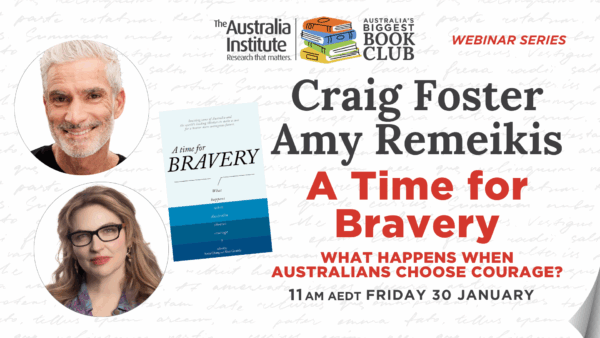
A Time for Bravery with Craig Foster AM & Amy Remeikis
Friday, 30 January | Online
Join Craig Foster AM and Amy Remeikis discuss their contributions to A Time for Bravery, from Australia Institute Press.
We are living at a critical point in history with the stubborn problems of rising inequality, rising fossil fuel production, and declining faith in democracy. This is a time for individuals, organisations, communities and our elected representatives to find the bravery we need to not just acknowledge, but address, the challenges we face.
A Time for Bravery brings together advocates, politicians, campaigners, medical doctors, academics and a firefighter each with their answer to the question: what does bravery look like in Australia and how might it reshape our future for the better.
Between the Lines Newsletter
The biggest stories and the best analysis from the team at the Australia Institute, delivered to your inbox every fortnight.