
The mining industry is used to having its voice heard in Australian public debates, so it should come as no surprise that mining billionaires such as Gina Rinehart and Clive Palmer would consider buying up a bigger slice of the Australian media. While the estimated $20m spent by the mining industry on television advertisements opposing the introduction of a mining tax was the most visible example of the industry’s determination to influence the public it is, in fact, just the tip of the iceberg. The problem for those interested in old-fashioned ideas like representative democracy and the development of policy in the national interest is that the mining industry has demonstrated, very clearly, that some sectional interests in Australia effectively have a veto over policy they don’t like the sound of.
Related documents
Between the Lines Newsletter
The biggest stories and the best analysis from the team at the Australia Institute, delivered to your inbox every fortnight.
You might also like
Working hard will not buy a roof over your head. If you can’t inherit one, you’re screwed
Australia has been in the grip of housing crisis for years.

Help for home buyers, horror for NDIS participants and the gas industry’s free ride rolls on
Scaling back tax breaks for property investors is the first policy change in a generation which will make housing more affordable, according to economists, following Tuesday’s Federal Budget.
Dodgy carbon credits under fire on all fronts
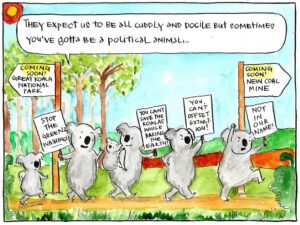
The NSW government’s decision to bar coal and gas companies from buying carbon credits generated by the Great Koala National Park is yet another blow for Australia’s chaotic carbon credit system.