
Australia has been in the grip of housing crisis for years.
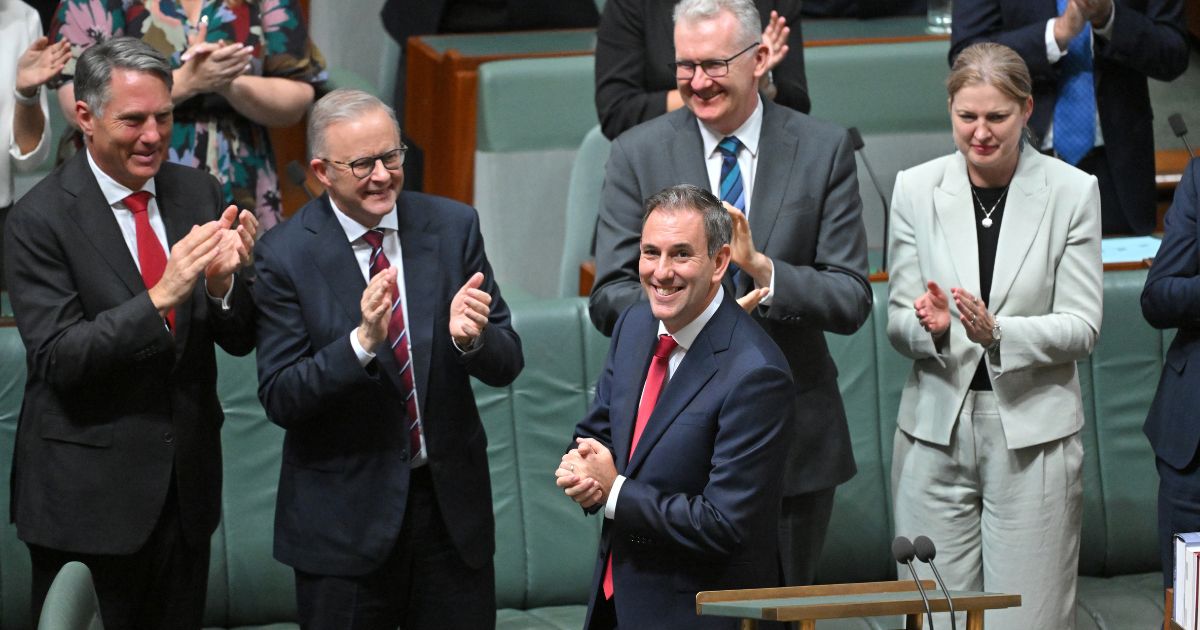
Home ownership is simply beyond the reach of many, rent is surging, and homelessness continues rising. It seems likely the Treasurer Jim Chalmers will implement changes to the 50 per cent capital gains tax discount and negative gearing in Tuesday’s budget, two policies which have worked together to push house prices up and up and up.
Which means for the first time in decades, this federal budget may stop making Australia’s housing affordability worse.
If Australia doesn’t do something to fix the problem, we will only become more unequal and more divided between the haves and have-nots.
As Alan Kohler said in his brilliant Quarterly Essay piece on the housing divide: “Education and hard work are no longer the main determinants of how wealthy you are; now it comes down to where you live and what sort of house you inherit from your parents. It means Australia is less of an egalitarian meritocracy. Material success is now largely a function of geography, not accomplishment.”
If working hard isn’t enough to buy you a stable roof over your head, what next?
Australia will be a poorer and less stable nation if home ownership becomes unaffordable for ordinary people.
We don’t want to become a society where the only way young people can dream of owning a home is if they are fortunate enough to inherit one. That’s why these tax reforms are so important.
For 25 years, the CGT discount and negative gearing have worked successfully together to turn housing from a home into a speculative asset. The 50 per cent capital gains tax discount, introduced by the Howard government in 1999, means that if you buy an asset like a house, hold it for at least 12 months and then sell it, you only pay tax on half the profit you made.
As a result, investors poured into the market. House prices and wages, which once grew at roughly the same rate, uncoupled entirely in the last two decades. On a graph, you can clearly see that after 1999, wages grew slowly while housing prices went through the roof.
For most people saving for a home, this means that even if you have a good job with a decent income, saving the deposit is a goal where the finish line keeps moving as you approach.
Like the horizon, you can never reach it. As people save, the price of houses – and the size of the deposit required (let alone the size of the loan) – keeps going up even faster, out of reach.
In March 2002, the cost of an average house in Sydney was 8.3 times the average annual full-time wage. By June 2024, it was equivalent to 14.4 years earning the average wage in NSW. In dollar terms, if the price was the same 8.3 times as it was in 2002 that average price would be just $835,000, instead it was $1.45 million.
Rising home prices mainly benefit investors, because even if you’re an owner-occupier and the value of your house has increased, when you sell your expensive house you still have buy a replacement house in the same expensive market.
More expensive houses require bigger home loans, which has other consequences for Australians and the economy.
As the Reserve Bank met to increase interest rates again, the Australia Institute released new research showing that the big four banks make $229,000 in profit on the average 30-year home loan for owner-occupiers. In the first year of their mortgage, Australian home owners are contributing more than $900 a month to their bank’s profit.
Unsurprisingly, owner-occupier mortgages are enormously profitable for the banks, while they make up just under a quarter of the banks’ loans, they account for almost 40 per cent of their profits. And while Australians have been forced to tighten their belts as prices rise, the big four banks raked in a staggering $43 billion in pre-tax profits last year.
RBA Governor Michele Bullock acknowledged that the RBA made the decision to raise interest rates knowing that “Australians are poorer” due to the economic shocks caused by the Iran war and knowing that further rate rises will only make them poorer still.
But that’s not the only cost. Together, the CGT discount and negative gearing are hugely expensive tax expenditures in the budget. The cost of the CGT discount alone was $21.8 billion in 2025-26.
Of that, the top 10 per cent of taxpayers get $17.8 billion (the top 1 per cent get $12.9 billion). In the midst of a housing crisis, where so many Australians are struggling to make ends meet let alone buy a house, there is no policy or economic reason Australia should spend $12 billion a year giving tax subsidies for the 1 per cent to have more investment properties.
While Australia spends $21.8 billion a year on tax breaks for property investors, it spends just a fraction of that on investing in social housing. It appears the federal government will only directly build public housing if you’re in the military, or for foreign military personnel serving here under the AUKUS agreement.
For years, governments dodged tax reform and primarily responded to the housing affordability crisis by announcing first home buyer schemes that predictably drove up demand and house prices.
It has become popular to blame population growth in general, and immigrants in particular, for housing stress, but it’s simply not true. The population has increased by 16 per cent in the past 10 years or so, and over the same period the number of dwellings rose by 19 per cent.
Long overdue, reforming the CGT discount and negative gearing won’t fix housing affordability overnight, but these two tax concessions cost the budget a bomb and make housing more expensive for literally everyone.
The Treasurer can start to fix that with this budget – and begin restoring the old-fashioned idea that a home is something you live in, not something you speculate on.
Between the Lines Newsletter
The biggest stories and the best analysis from the team at the Australia Institute, delivered to your inbox every fortnight.
You might also like
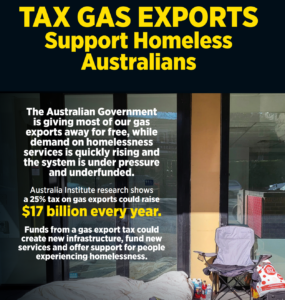
How to put a roof over the heads of thousands of Australians sleeping rough, couch surfing or living in their cars
With the number of Australian households at risk of homelessness surging towards a million, it’s estimated that governments will need to build 47,000 social and affordable homes each year – at a staggering cost of $18 billion annually.
There’s no saving the Coalition – and that should be a warning to Labor
You could almost taste the desperation in the air as various Liberal MPs attempted to justify their self destruction; but perhaps the most tasteless excuses were when it came to justifying their decision to the next generation.
Good policy is a choice | Between the Lines
The Wrap with Greg Jericho Governments can change the country for the better or worse. Failure to act for 26 years on housing affordability has left many Australians renting for most of their adult lives and led to for the first time since WWII, most Australians in their early 30s not owning their own home.