
Something happened in the Senate this week.
It didn’t change the law, but it revealed something important about the politics of gas in Australia-the old political lines are starting to blur.
Independent ACT Senator David Pocock moved a motion calling for an inquiry into “Why Gas Companies Pay Less for Offshore Liquefied Natural Gas than Australians Pay in Beer Excise”. It’s the kind of thing the Senate, as the house of review, examines all the time. Yet the response from Parliament revealed a lot about the current state of politics.
The motion was supported by an unlikely coalition of independents, the Greens, and One Nation. On an issue that usually splits along predictable ideological lines, politicians from across the political spectrum were aligned.
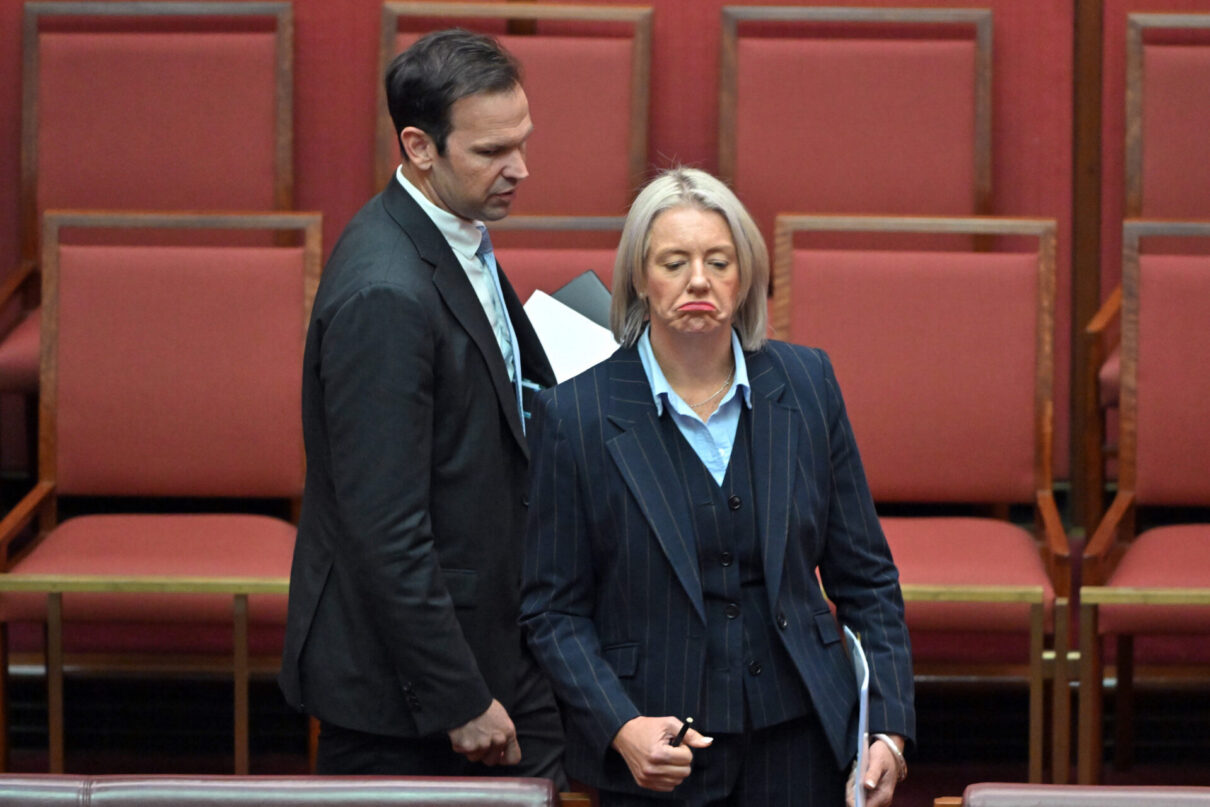
The major parties, however, failed the test. Labor voted against the inquiry. The Coalition, including new Nationals leader Matt Canavan, did not even turn up to vote.
In doing so, they avoided answering a question many Australians are now asking: why does one of the world’s largest gas exporters collect so little tax from the industry extracting its resources?
Australia is one of the world’s biggest exporters of liquefied natural gas. Our offshore gas fields generate enormous profits for multinational corporations. Yet the public return on these resources is astonishingly small.
The petroleum resource rent tax (PRRT), the main mechanism for taxing offshore gas projects, was supposed to ensure Australians received a fair share of profits from resources owned by the public. Resources we can only sell once. Instead, gas companies are raking in record profits, while ordinary Australians pay the price.
At the same time, governments are still subsidising the industry. Australian fossil fuel subsidies are growing faster than the NDIS. New research from the Australia Institute shows Australian governments will provide $16.3 billion in fossil fuel subsidies in 2025-26. That works out to about $31,000 per minute handed to coal, oil and gas companies.
As Rod Campbell, research director at The Australia Institute has pointed out, “It makes no sense to be subsidising profitable multinational mining companies while short-changing Australia’s age pensioners and those living with disabilities. Australian governments have refused to crack down on fossil fuel subsidies, while complaining about the cost of looking after people.”
The problem isn’t just that Australians receive little revenue from our gas resources, it is that many Australians struggle to afford energy produced from those same resources.
Former Labor minister Ed Husic laid out the contradiction clearly in the Parliament this week. He talked about how Australia has some of the largest gas reserves in the world, which should, in theory, shield the country from price shocks. Instead, domestic gas prices have tripled over the past decade. Gas exporters have shipped so much gas overseas in the past five years that it could supply Australia’s entire domestic market for roughly two decades at current usage levels. Yet Australians are repeatedly told the furphy that supply is tight.
In other words, Australia is not running out of gas. It is running short on policy courage.
The problem, Husic argued, is not scarcity but market failure. Exporters prioritise higher international prices, sending vast quantities of gas overseas even when domestic supply is constrained. Husic wrote to the Treasurer to urge him “to send an unambiguous signal that, if gas companies seek to profiteer off what’s happening in the Middle East, the government is prepared to cap prices again”. He also urged serious consideration of the proposal to tax gas exports.
The idea of a 25 per cent tax on gas exports, as proposed by the ACTU, is gathering serious momentum from across the political spectrum.
The principle is straightforward. Australia’s natural resources belong to the Australian public. Companies that extract and export them should pay a fair share of the value they generate. A modest export tax would achieve three important outcomes.
Firstly, it would help stop the “great gas giveaway”. By placing a tax on exports, the government could capture at least a share of the enormous profits generated by LNG exports that currently flow largely to foreign shareholders.
Secondly, it would raise billions of dollars in public revenue. Those funds could support healthcare, education, infrastructure and the energy transition. At a time when governments claim budgets are tight, it makes little sense to ignore one of the most lucrative revenue opportunities available.
Energy Minister Chris Bowen says the government will temporarily lower fuel stock requirements to help companies move more petrol and diesel to regional communities facing supply pressure.
Thirdly, it would help correct the distortions in Australia’s gas market. If exporting gas became slightly less profitable, companies would have a stronger incentive to prioritise domestic supply. That could ease price pressures for households and businesses struggling with rising energy bills.
What made this week’s Senate vote on the inquiry into gas so striking was the coalition of support behind it. Increasingly, concerns about multinational corporations extracting resources while paying little tax resonate across the political spectrum. National polling released by The Australia Institute showed that two in three (67 per cent) One Nation voters and seven in ten Greens voters (70 per cent) agree that gas export corporations should pay a flat 25 per cent on gas exports. Even the United Australia Party supported the idea this week.
The debate over gas taxation ultimately comes down to a simple question: Who should benefit from Australia’s natural resources?
Right now, the answer is overwhelmingly multinational gas corporations and their shareholders. The Australian public receives relatively little in return. Other resource-rich countries manage to capture far greater value from their fossil fuel exports.
A 25 per cent gas export tax is a practical step toward ensuring Australians receive a fair return from resources that belong to them. It would also send a clear signal that the era of subsidising and under-taxing fossil fuel exports is coming to an end.
Australians across the political spectrum are starting to ask why our gas wealth delivers so little for the country that owns it.
It seems like sooner rather than later, voters will demand that Labor and the Coalition stop ignoring that question and do something about it.
Between the Lines Newsletter
The biggest stories and the best analysis from the team at the Australia Institute, delivered to your inbox every fortnight.
You might also like

The great gas rip off: how the government can stop us all getting burned
The Albanese government could soon intervene to start fixing one of the biggest ongoing public policy fiascos in this country’s history: Australia’s rampant, uncontrolled gas export industry.

I’ll admit it. Dutton is spot on about one thing when it comes to gas
It’s not often I agree with Peter Dutton, but I can admit when he’s right and he’s right about two things.

SA Premier spreads gas industry misinformation
South Australian Premier Peter Malinauskas has told an event sponsored by the gas lobby that a new gas project in Narrabri, NSW, is needed to firm up his state’s electricity supply.