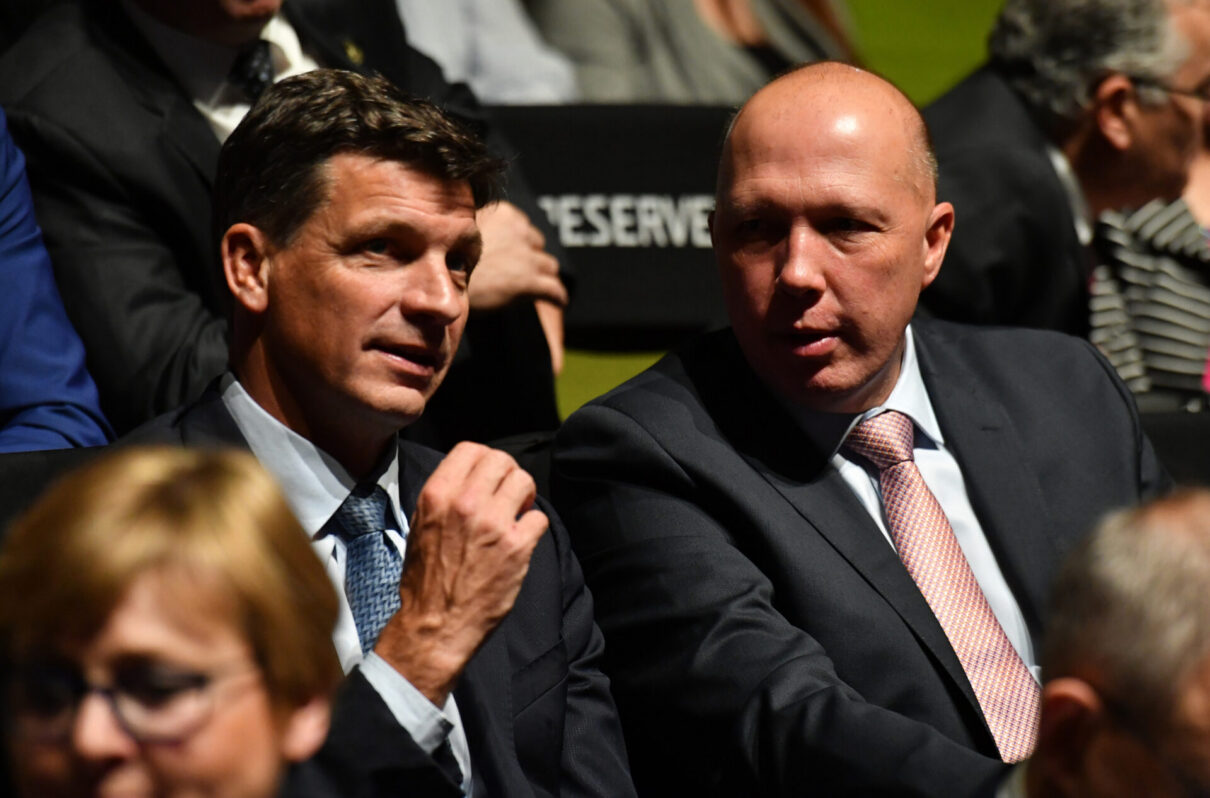

After months of speculation, the Liberal Party has a new leader, and the Coalition has a new frontbench. So, does that mean we can expect some new ideas?
Don’t hold your breath.
Why am I pessimistic? Well, the problem with the Coalition isn’t just that they all want to be captain of the Titanic after it has struck the iceberg. The real problem is their policy solutions are rubbish.
Remember, there was no leadership speculation when Peter Dutton led the Coalition to last year’s historic election hammering.
The public didn’t reject the Liberals and Nationals because of internal fighting. They rejected them because they didn’t like their policies.
Dutton spent three years telling Australians that they were in the middle of a cost-of-living crisis (which was true). But when the election came around, the public could see how truly terrible the Coalition’s solutions were.
Does anyone remember the claims that nuclear, the most expensive form of electricity, was going to lower power bills?
On housing affordability, it was just as bad. Its big policy was to allow first-home buyers to drain their super accounts to buy a home. This would have been like a first-home buyers’ grant on steroids. The result would have been much higher house prices coupled with more Australians retiring in poverty.
So, will the new leadership team do any better? The early signs aren’t good.
One of the biggest supporters of the plan to use super to juice house prices was Tim Wilson. Angus Taylor has just appointed him shadow treasurer.
Just as worryingly, the new shadow finance minister, Claire Chandler, has already wheeled out that tired, false argument that the immigration is to blame for the housing crisis. In a Facebook video she says:
“There’s been too much intervention, too many new taxes, and migration increasing at a point where supply can’t really keep up.”
The “too many taxes” is presumably a dig at rumours that the government might be considering (long overdue) changes to the capital gains tax discount.
But Chandler’s main point seems to be that the population, through migration, is growing faster than housing supply.
OK, this is a fairly simple thing to fact check. Let’s have a look at what has been happening to population versus housing supply.
According to the Australian Bureau of Statistics, over the past 10 years the population has increased by 16 per cent. If immigration is to blame, then the increase in the number of homes must have been much less than this.
In fact, over those same 10 years, the number of dwellings in Australia increased by 19 per cent. That’s faster than the growth in population.
So, in 10 years, the number of homes per person has grown, not fallen.
Let’s look back even further. After all, the housing crisis is not a recent problem. It has been brewing for a lot longer than 10 years.
What about growth in population and homes before that?
The ABS series on the number of dwellings doesn’t go back much further than 10 years, but the census does. And the census is the most accurate record of both the number of people and the number of homes – they go out and count every one of them.
House prices really started to take off in the early 2000s, so let’s compare the latest census in 2021 with the census in 2001. Over those 20 years, the population increased by 34 per cent. To just keep up with the population, the number of homes in Australia would also need to rise by 34 per cent, right?
As it turns out, the number of homes in Australia increased by 39%.
Again, housing growth outpaced population growth.
The real problem has never been housing supply. It’s been the massive increase in investor demand for housing. Investors have rushed into the market, bidding up house prices, beating first-home buyers at auctions, and putting home ownership beyond the reach of so many Australians.
Driving demand for investment properties has been the huge tax concessions on offer, the most important of which is the capital gains tax discount. Scrapping that would reduce the number of investors showing up to auctions. It would give first-home buyers a real chance to own a home of their own.
But not only does the Coalition inaccurately cling to immigration as the cause of the housing crisis, it rejects solutions like scrapping the capital gains tax discount.
The debate on the housing crisis, like the housing market, is cooked.
It’s not immigrants who are responsible for the housing crisis, it’s cashed-up investors, taking advantage of outrageous tax concessions, hoovering up as many properties as possible.
If the Coalition wants to be politically competitive, it’ll have to do more than stop talking about itself. It’ll need to come up with real, fact-based solutions to the problems that Australians face.
If not, it will struggle in the polls and, six to 12 months from now, we’ll see another round of leadership speculation and, probably, a new leader.
Between the Lines Newsletter
The biggest stories and the best analysis from the team at the Australia Institute, delivered to your inbox every fortnight.
You might also like

The house always wins: Why we can’t insure our way out of the climate crisis
It is time for the Australian government to admit we can’t insure our way out of the climate crisis our fossil fuel exports do so much to cause.

Election entrée: think three-year terms are too short? Spare a thought for generations past.
Complaints about the brevity of three-year parliamentary terms are common in Australia.
The election exposed weaknesses in Australian democracy – but the next parliament can fix them
Australia has some very strong democratic institutions – like an independent electoral commission, Saturday voting, full preferential voting and compulsory voting. These ensure that elections are free from corruption; that electorate boundaries are not based on partisan bias; and that most Australians turn out to vote. They are evidence of Australia’s proud history as an