
The June quarter GDP figures released by the Bureau of Statistics showed that over the past year the economy grew a seemingly strong 3.6%.
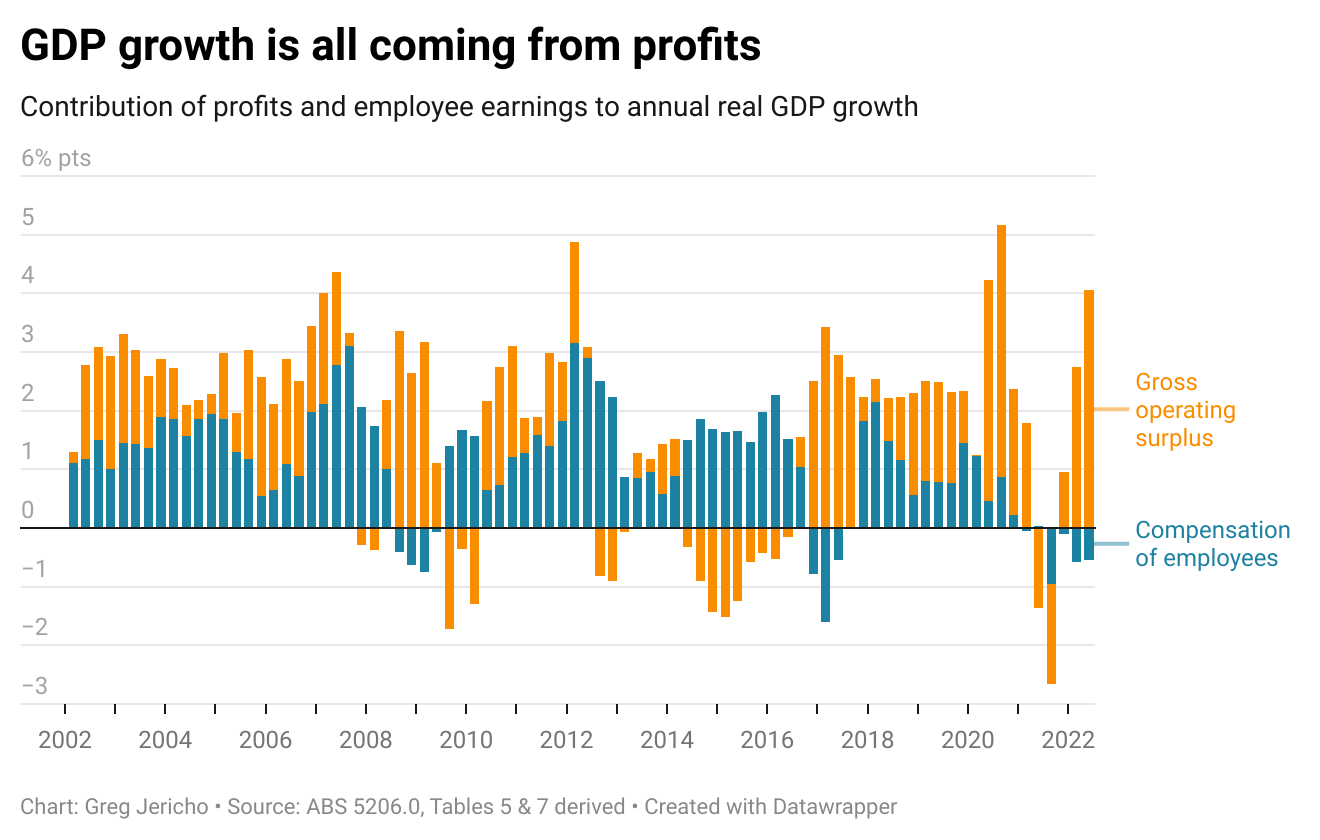
But as labour market and fiscal policy director Greg Jericho notes in the Guardian Australia column, beneath those good numbers are a lot of problems, not the least of which is that wages continue to fail to keep up with inflation. Over the past year the total compensation of employees rose 7% but inflation in the national accounts rose 8.3%. Over the same period corporate profits went up 25%. We are at the absurd state of affairs where GDP is rising strongly, but real wages are not.
We now have a situation where a record low share of national income is going to employees and a record high share is going to profits.
The talk is always about lifting productivity and wages will follow, but the story for far too long now has really been productivity rising and profits following.
Between the Lines Newsletter
The biggest stories and the best analysis from the team at the Australia Institute, delivered to your inbox every fortnight.
You might also like
Corporate Profits Must Take Hit to Save Workers
Historically high corporate profits must take a hit if workers are to claw back real wage losses from the inflationary crisis, according to new research from the Australia Institute’s Centre for Future Work.
Budget 2026: Housing changes to slowly reverse decades of damage
The government’s changes to capital gains and negative gearing will begin to undo decades of damage to the housing market caused by Howard-era policies – so will Elinor actually be able to buy a house?
BREAKING: Australia’s housing market still cooked
Even the Mathias Cormann-led OECD says the capital gains tax discount and negative gearing are a problem.